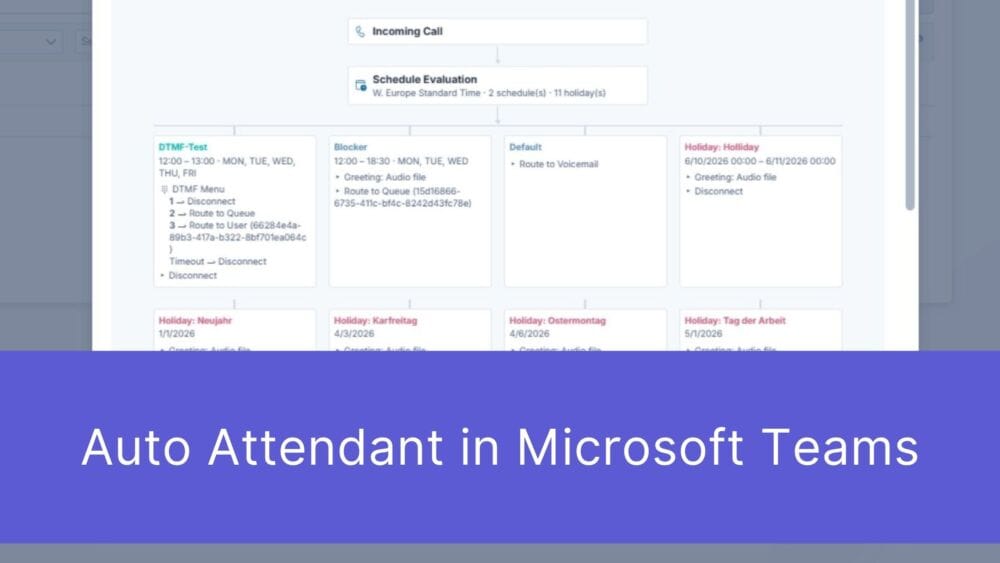
Auto Attendant in Microsoft Teams: Why Standard Telephony Isn’t Enough for Professional Customer Service
First impressions matter – and that’s truer than ever in the digital age. When a potential customer picks up the phone to contact your ...
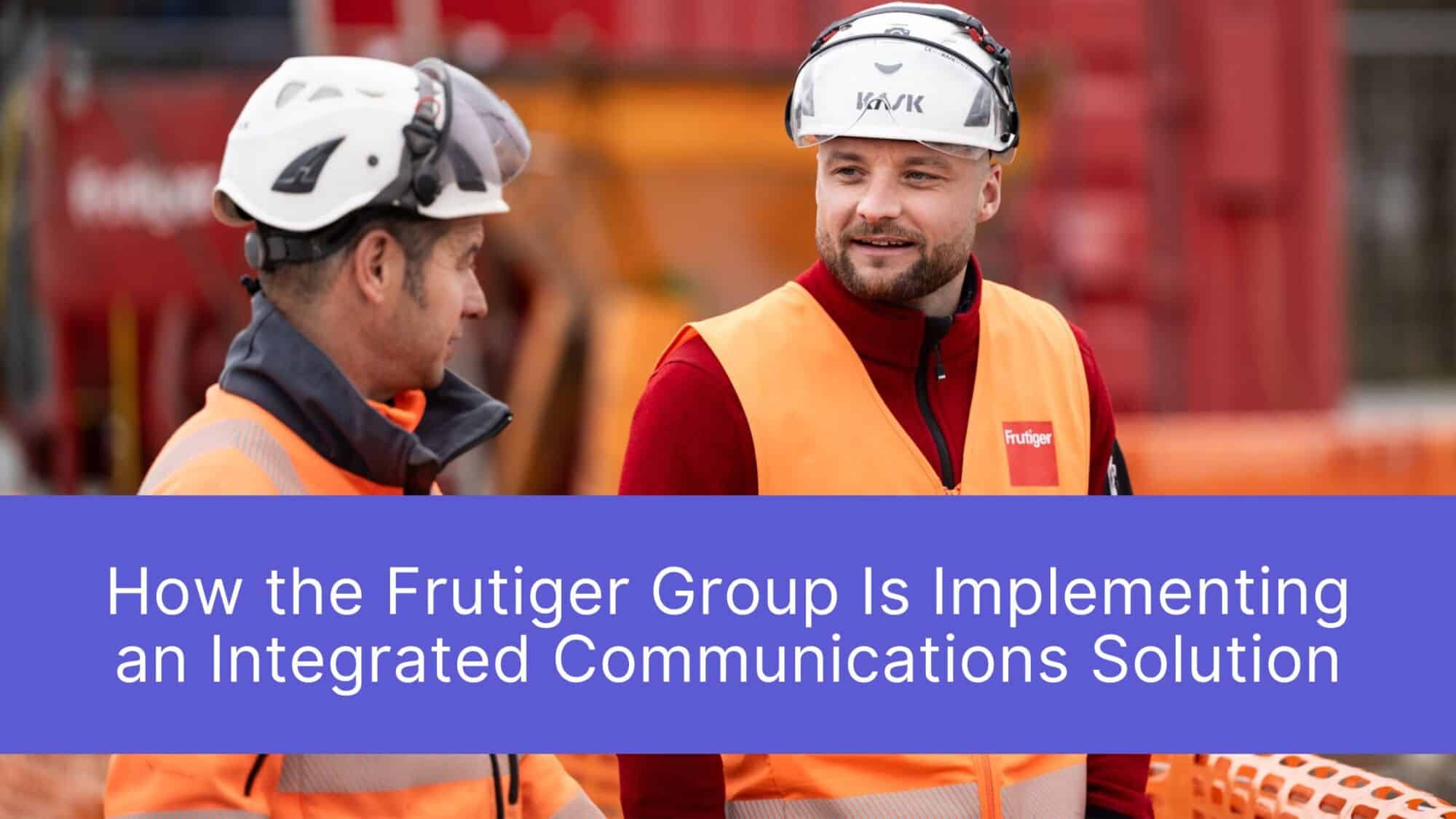
When every minute counts, accessibility must be guaranteed – both in the office and on the construction site. The Frutiger Group, one of Switzerland’s leading construction companies, faced the challenge of transitioning to Microsoft Teams telephony while simultaneously consolidating collaboration within Microsoft Teams. Together with TwinCap First, the Frutiger Group has embarked on a path toward a fully integrated, cloud-based communications future: Microsoft Teams as the central platform, including external telephony with features such as call identification and complementary add-ons. The decisive factor was not only the technology, but the one-stop solution, with excellent support and proven Microsoft expertise. In this customer case study, we outline the initial situation, the migration approach (coexistence), the implemented solution, and why Frutiger chose TwinCap First.
Until the end of 2025, the Frutiger Group operated two communication systems in parallel: A small portion of the workforce was already using Microsoft Teams for calls, while the majority remained on a traditional on-site PBX (physical system). This system was connected to another telecom provider via an “on-prem” Session Border Controller (SBC).
The consequences: redundancy, higher operating costs, and media discontinuities for employees. On the one hand, on-site hardware maintenance incurred high costs. On the other hand, location-independent work, especially for project managers moving between the office and construction sites, became unnecessarily complicated. The goal was therefore clear: a single platform for chat, meetings, documents, and external telephony – with end-to-end management.
A project of this magnitude cannot be implemented “at the flip of a switch.” Voice quality, routing, and reliability had to perform under real-world conditions. Therefore, a test environment was set up in 2025, and the connection via TwinCap First’s Direct Routing was extensively tested.
This allowed the Frutiger Group to verify that cloud telephony could withstand the demands of everyday construction work. Live operations began only after the test was successful.
The most critical moment in any telephony migration is the transition: This must succeed without interruption for customers, partner companies, and construction site personnel. Here, TwinCap First’s expertise in Direct Routing and SBC played a central role.
Since the end of 2025, all telephone traffic to and from Frutiger numbers has been routed via TwinCap First’s redundant SBC platform. At its core is an intelligent set of rules (routing logic) on our SBCs, supplemented by features such as call recognition.
Another major advantage is our proprietary add-ons, such as Easy Calling, which allow users to make calls in Microsoft Teams as easily, quickly, and consistently as possible.
This hybrid approach enables the Frutiger Group to transition department by department at its own pace, without the outside world noticing the major overhaul taking place in the background.
The Frutiger Group chose TwinCap First because, in addition to the technical solution, operational reliability, tangible support, and Microsoft expertise were key factors. The most important reasons at a glance:
We are currently in the middle of the rollout. By mid-2026, all remaining departments and subsidiaries of the Frutiger Group will be successively integrated into the Microsoft Teams environment. The goal is getting closer every month: the complete decommissioning of the legacy system.
Once the last department has migrated, the entire organization will benefit from a consolidated infrastructure. This means less complexity for the IT department, lower fixed costs, and significantly increased agility for employees. Whether at the construction office in Thun or on a large construction site in Zurich – anyone dialing a Frutiger number can reliably reach their partner via Microsoft Teams.
The project at the Frutiger Group demonstrates that the transition to Microsoft Teams telephony can be successfully implemented even in complex enterprise environments with multiple locations and hundreds of employees. Key factors include a clear migration strategy, the right technical architecture, and a partner who is proficient in both the Microsoft ecosystem and telecommunications.
TwinCap First AG supports companies on this journey with technical expertise, proprietary add-ons, and personalized support. This way, Microsoft Teams telephony becomes not just a replacement for an existing PBX system, but a central communication platform for modern, location-independent work.
Do you want to modernize your reachability and consolidate telephony, collaboration, and support into a single solution? We’d be happy to show you in a brief assessment how the implementationtieg auf Microsoft Teams Telefonie bei laufendem Betrieb gelingt und stellen dir unsere Add-ons vor.
Book a free consultation | Learn more about Microsoft Teams telephony
Subscribe to our blog and never miss a post again. We will not spam you, but only inform you about new posts.
First impressions matter – and that’s truer than ever in the digital age. When a potential customer picks up the phone to contact your ...

The digital landscape is changing rapidly, and Swiss companies face enormous challenges. Storing data exclusively within the country or maintaining complete control over every ...
Anyone who makes calls using Microsoft Teams is probably familiar with this situation: The phone rings, but instead of a name, only a phone ...

A few weeks ago, we’ve been discussing an uncomfortable truth: Purchasing a Microsoft license is by no means a “Modern Work” strategy. A license ...
Book a Microsoft Teams meeting appointment with Christoph Schoch. After booking, you will receive an appointment invitation. There you will find a link for the Teams meeting. Of course you can also send us an e-mail or call us directly.
If you have any questions, please use our Help Centre and/or open a ticket for your request.